Investments Target Growth in the Life Sciences and Quantum Technologies Industries
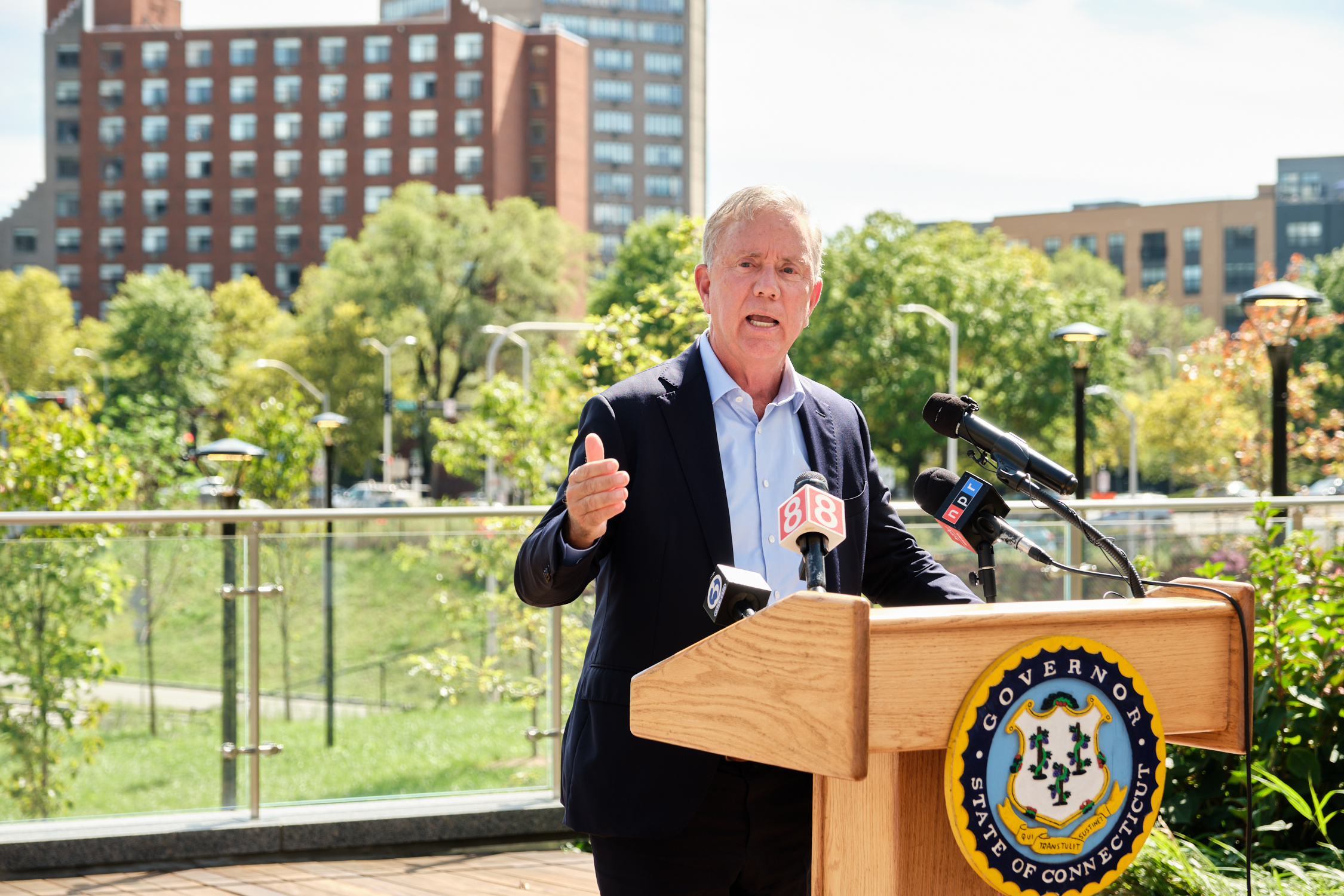
(HARTFORD, CT) – Governor Ned Lamont today announced that his administration is making a $50.5 million investment in public infrastructure and facilities in downtown New Haven that are targeted toward propelling growth in the life sciences industry and the emerging sector of quantum technologies, setting the stage for a new generation of cutting-edge research, innovation, and business and job growth in these sectors.
The investments are included as part of the first grant award made under the state’s newly launched Connecticut Innovation Clusters Program, which is administered by the Connecticut Department of Economic and Community Development (DECD).
“Every day in downtown New Haven, workers are developing the cutting-edge research, technologies, and products that are changing the world and propelling Connecticut forward as a leader in the fields of life sciences and quantum technologies,” Governor Lamont said. “We want to build on this foundation, encourage new growth, and further cement New Haven’s reputation as a groundbreaker in these sectors. These targeted investments in the downtown neighborhood’s public infrastructure and facilities will enable us to further partner with these businesses and accelerate job growth and more opportunities here in Connecticut.”
“The strategic value of this investment is enormous, as we are essentially doubling down on areas where Connecticut already has competitive advantages,” Daniel O’Keefe, DECD commissioner and the state’s chief innovation officer, said. “Supercharging our life sciences and innovation capacity will have far-reaching positive impacts on the state’s ability to attract new talent, investment, and companies, as well as strengthen our overall competitiveness.”
The investments being made in this wide-ranging project will seed the next era of growth in New Haven’s downtown innovation district, an existing cluster of world-class expertise in the life sciences that will expand and add new strength in quantum technologies and cross-industry collaborations. Components include:
- New Haven Innovation Center: Create a 4,500 square foot ‘early start’ activation space within 101 College Street. ($1,300,000)
- QuantumCT: Provide critical financial support to this nonprofit that is the statewide coordinating body for quantum computing infrastructure and testbed deployment, convening industry, academia, and startups. ($10,000,000)
- Public Infrastructure: Financing pedestrian-first streetscapes, stormwater management and climate-resilient mobility infrastructure necessary to support Parcel B development. Parcel B is a development parcel created following the removal of the Route 34 expressway located east of 101 College Street. ($17,500,000)
- Development Fund Gap Financing: Facilitate the development of Parcel B (200,000+ sf), owned by the City of New Haven and 265 South Orange Street, the Square 10 (former Coliseum) site (277,000+ planned life sciences building). ($14,500,000)
- Arch Street Bridge and Church Street Promenade: Create a multi-modal pedestrian corridor connecting Union Station to Downtown and the Hill neighborhoods, with a signature pedestrian arc bridge and linear park and a pedestrian/bike promenade. ($4,200,000)
- BioCT: Activate the cluster with programming led by BioCT to bring together civic, academic, and business partners within the heart of the district and from across the state. ($3,000,000)
“Representing 300 member organizations, BioCT’s mission is to foster Connecticut’s burgeoning life sciences ecosystem – building a village around every job seeker, entrepreneur, and company seeking to come, stay, and grow here,” Jodie Gillon, BioCT CEO, said. “Our industry is a driving force in the state’s economic development, with New Haven at its center. The innovation cluster further catalyzes a critical mass, marking a pivotal moment for state investment. I applaud our legislators for overcoming federal headwinds and ensuring that science, innovation, and Connecticut can – and will – win.”
“At a time when many states seem to be moving away from science and technology, Connecticut has chosen to increase its investment in the future, investing in the places, the partners, and the existing industries to create transformative impact and growth for the people of Connecticut,” Carter Winstanley, principal for Winstanley Enterprises, said.
QuantumCT is a newly established nonprofit organization that serves as the statewide coordinating body for quantum infrastructure, research, and commercialization. The organization is the result of a landmark partnership between Yale and UConn that was launched in response to the National Science Foundation’s Regional Innovation Engines program, which could bring up to $160 million in additional federal investment to the state. QuantumCT will operate a shared-use testbed facility, support venture development and advance workforce development initiatives.
“Being selected for the Innovation Clusters Program affirms the central role QuantumCT will play in shaping Connecticut’s future economy,” QuantumCT CEO Albert M. Green, said. “By bringing together universities, companies, and investors, we are creating the infrastructure, talent pipeline, and partnerships needed to make Connecticut the place where next-generation industries take root and grow. This award sends a clear signal that Connecticut is committed to investing in transformative technologies that will drive competitiveness, attract global companies, and create opportunity for our residents for decades to come.”
Yale University and UConn are central to the success of the cluster. Yale brings world-class research capabilities in quantum science and biomedical innovation, as well as strengths in accelerating entrepreneurship through Yale Ventures. UConn brings deep expertise in advanced manufacturing, engineering, and translational research, and is a key partner in workforce development and commercialization efforts. Together, these institutions will help drive the cluster’s mission to translate cutting-edge research into scalable businesses and high-quality jobs.
“Connecticut has one of the nation’s strongest concentrations of early adopters of quantum technologies, positioning the state as a leader in this emerging field,” Pamir Alpay, vice president for research, innovation, and entrepreneurship for UConn, said. “By working closely with industry partners, we are advancing near-term applications that will lay the foundation for a quantum-enabled future.”
“This investment will allow Yale, UConn, the City of New Haven, and our partners to accelerate the translation of quantum and bioscience research into applications that benefit Connecticut’s communities and economy,” Michael Crair, vice provost for research at Yale University, said. “By building shared infrastructure and training the next generation of innovators, we can ensure that quantum technologies take root and grow here in Connecticut. It’s an exciting step forward for our city and state.”
The Quantum and Bioscience Cluster is a coalition of stakeholders that includes QuantumCT, Yale University, UConn, L&G, Winstanley Enterprises, BioCT, and the City of New Haven. Other higher education institutions in the region are expected to play an active role in the cluster moving forward.
This industry cluster award will reinforce and complement several other state investments in the area. These include:
- Brownfield redevelopment grants to clean up and spur projects at the Square 10 sites
- Investment in 101 College Street
- Housing investments at the Orange and State intersection, State Street, and near Union Station
- CT Community Challenge pedestrian improvements along the State Street corridor
- Community Investment Fund 2030 and Connecticut Department of Housing support for State Street location of Downtown Evening Soup Kitchen and co-located community health services from Cornell Scott Hill Health Center
- Connecticut Department of Transportation redevelopment of the Union Station parking lot into a vibrant, mixed-use development anchored by two 16-story towers, bringing new housing, retail and jobs
“New Haven is a growing national hub for life sciences and an innovation ecosystem poised to leverage the promise of quantum computing and technology,” Mayor Justin Elicker said. “This $50.5 million investment by the state will help further catalyze New Haven and Connecticut’s economic growth and future in these industries, creating new businesses, new jobs, and new opportunities for our residents and our city while also growing our tax base. With our new BioCity career pathways program, we’re also already working to create the pipeline of New Haven students who will enter these fields and take advantage of these future job opportunities in their home town.”
The Connecticut Innovation Clusters Program is a $100 million initiative to support the continued growth of critical sectors of the Connecticut economy, including biotechnology, financial technology, insurance technology, and advanced manufacturing in support of national defense. The program leverages private and public investment to support the application of next-generation technologies, such as artificial intelligence and quantum computing, to accelerate innovation in the state’s high-growth industries.