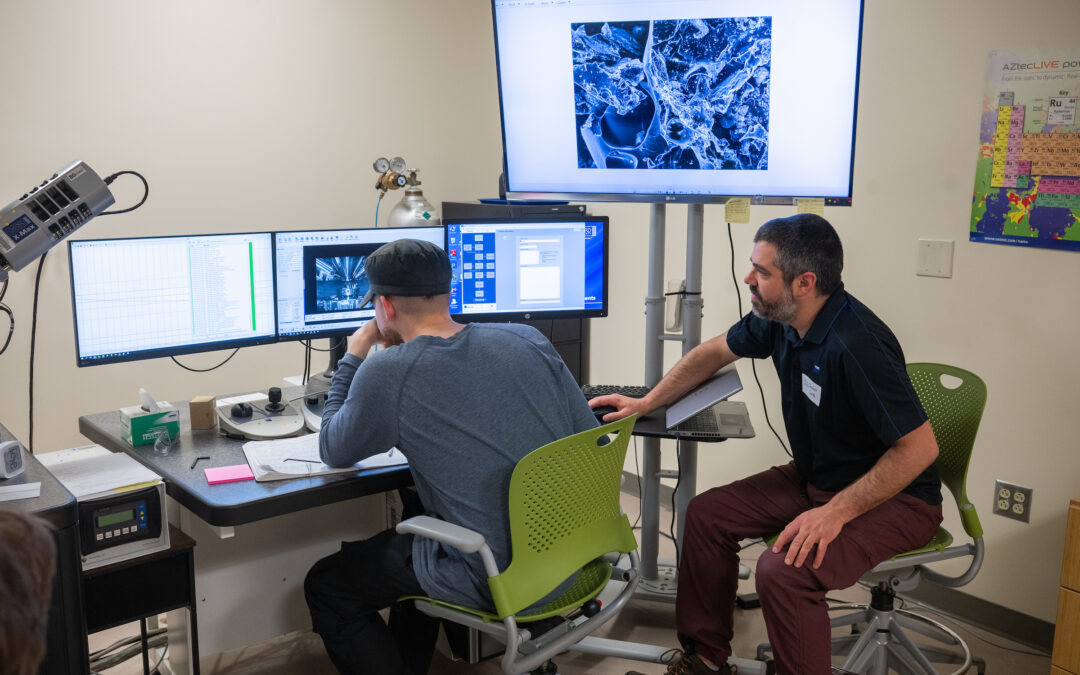
Governor Lamont Announces Expansion of Ai Postsecondary Education and Workforce Training Through Connecticut’s Tech Talent Accelerator

(HARTFORD, CT) – Governor Ned Lamont today announced the launch of the third phase of the Connecticut Tech Talent Accelerator (TTA 3.0), a statewide higher education innovation challenge designed to expand artificial intelligence (AI) education and workforce training. This initiative will accelerate the development of AI-skilled talent across Connecticut, strengthening the state’s competitiveness in a rapidly evolving digital economy. Seven colleges and universities will participate in an initial pilot with 12 business partners.

Artificial intelligence is transforming workplaces across Connecticut and the nation. In Connecticut, demand for AI skills is rising. Since August 2024, nearly 11,000 job postings have required AI skills – a 40% increase from the year prior. Today, one in 52 jobs in the state list AI skill requirements, up from one in 70 a year ago. The demand is even stronger in roles requiring an associate or bachelor’s degree, where one in 23 jobs now call for AI expertise, spanning nearly every industry and occupation.

“AI is reshaping many sectors of our economy, and Connecticut is ensuring our workers and students are prepared to lead in this new era,” Governor Lamont said. “By investing in AI education and workforce training through the Tech Talent Accelerator, we are strengthening our talent pipeline, supporting Connecticut businesses, and creating opportunities for everyone to secure high-quality, good-paying jobs.”

Since its launch in 2022, the Tech Talent Accelerator (TTA) has been championed by the Connecticut Office of Workforce Strategy in partnership with the Business-Higher Education Forum and the New England Board of Higher Education. Through two previous rounds of funding, the program has supported partnerships between 13 higher education institutions and 26 businesses to modernize curricula, offer short-term credentials, and deliver in-demand tech training in areas like cybersecurity, cloud computing, data analytics and game design.

The third phase of TTA (TTA 3.0) builds on this foundation by funding AI skills programs at Connecticut’s public and independent colleges and universities. The following seven institutions and their 12 business partners will participate in a pilot phase:

  • Connecticut College will integrate applied AI skills and competencies into three credit-bearing accounting and entrepreneurship courses.
  • Fairfield University will embed AI competencies into nursing education through curriculum enhancements, workshops, and a non-credit digital badge, as well as engage undergraduate computer science students in an eight-week summer experience creating AI-enabled nursing simulation tools.
  • Quinnipiac University will develop an eight-week online program focused on AI fundamentals in healthcare business innovation.
  • Southern Connecticut State University will expand its AI in Manufacturing program to include quantum computing concepts through a new non-credit microcredential.
  • University of Connecticut will deliver a cross-disciplinary, industry-inspired AI workflow agent microcredential with stackability into existing engineering degree pathways.
  • University of New Haven will launch an AI for Cybersecurity concentration within its BS in Cybersecurity program.
  • University of Saint Joseph will revise and create four credit-bearing courses and launch a Certificate in Applied AI for Business that incorporates capstones, internships, and challenge-based experiences.

“Connecticut’s economic future depends on our ability to anticipate workforce needs and invest in programs that meet them,” Dr. Kelli Vallieres, Connecticut’s chief workforce officer, said. “TTA 3.0 represents a strategic step forward in equipping students and workers with the AI skills that employers across our state demand.”

A second round of grants in mid-2026 will support the launch of new industry-led AI programs informed by lessons learned from the pilot cohort.

Kristen D. Fox, president and CEO of the Business-Higher Education Forum, said, “The Business-Higher Education Forum has long championed the power of partnerships between business and higher education to build the workforce of the future. TTA 3.0 is a model of this approach in action, enabling employers to shape curricula and training while higher education delivers the talent pipeline Connecticut needs to thrive in the AI economy.”

Michael K. Thomas, president of the New England Board of Higher Education, said, “The New England Board of Higher Education is proud to partner in this initiative, which highlights the essential role of innovation in postsecondary education. By rethinking programs, embedding industry-recognized credentials, and creating stronger on-ramps for students, TTA 3.0 ensures that learners at every stage have access to and preparation for opportunities in AI-driven fields.”

Steven Lacroix, vice president of consulting services for CGI, said, “CGI’s continued participation in the Connecticut Tech Talent Accelerator reflects the importance of defining and developing AI skills alongside higher education partners. Our collaboration with the University of Saint Joseph strengthens our talent pipeline while supporting students in gaining practical, job-relevant experience through applied coursework and hands-on learning.”

Laura Zucker, public service client account lead for the State of Connecticut at Accenture, said, “At Accenture, we are grateful for the leadership of Governor Lamont and Dr. Vallieres on this important initiative. Those of us in the professional services and technology industries see firsthand how AI is transforming Connecticut across all sectors. TTA 3.0 will help us hire workers who are not only prepared for today’s roles but also have the skills to grow with us as AI continues to evolve. This program is a win for businesses, for workers and for the state’s economy.”

Jennifer Widness, co-founder of the Connecticut AI Alliance, said, “The Connecticut AI Alliance is excited to support TTA 3.0 as a powerful catalyst for innovation within higher education. Connecticut’s colleges and universities are uniquely positioned to prepare students for the opportunities and challenges of an AI-enabled future. By aligning curricula with industry needs, embedding real-world learning experiences, and fostering cross-sector collaboration, this initiative will strengthen our institutions’ capacity to equip learners with the skills and knowledge required to lead in a rapidly evolving economy.”

For more information about TTA 3.0, visit www.bhef.com/techtalentaccelerator
Recent News

U.S. National Science Foundation Announces Transformational Award to Connecticut’s Quantum Tech Sector

For Immediate Release
July 14, 2026 —
WASHINGTON, D.C. — The U.S. National Science Foundation (NSF) announced today that
Connecticut is one of twelve regions selected to receive an NSF Regional Innovation
Engines (NSF Engines) award, joining a portfolio of regional technology clusters that are
accelerating the development of critical technologies and building a durable U.S.
technology advantage.
The NSF Quantum Technologies Engine in Connecticut, led by the University of
Connecticut in partnership with Yale University, Southern CT State University, Connecticut
State Community College, ConnCORP, CT Innovations, and the State of Connecticut, aims
to advance American quantum innovation and secure the domestic quantum supply chain
by accelerating the commercialization of quantum technologies for national defense,
biotechnology, and financial services. Through innovation, applied research leading to new
technologies, support for inventors and entrepreneurs, and workforce development, the
NSF Quantum Technologies Engine will advance quantum sensing, secured
communications, computing, and materials through shared testbed, deep-tech incubator
and translation pathways.
“NSF Engines investments in critical technologies and future industries will transform
America’s innovation infrastructure for decades to come,” says Brian Stone, performing the
duties of the NSF director. “The NSF Quantum Technologies Engine will advance the
Nation’s quantum innovation by accelerating the commercialization of quantum
technologies for national defense, biotechnology and financial services.”
The NSF Quantum Technologies Engine in Connecticut (the QuantumCT Engine) team will
initially receive a two-year, $15 million award. The funds will support the Engine’s
technology translation, workforce development, and incubator operations. The funds will
also facilitate industry and community engagement to deliver broad societal benefits. By
demonstrating sufficient progress, the QuantumCT Engine has the potential to receive
$160 million from NSF over the next decade.
The QuantumCT Engine will leverage world-leading research and innovation expertise from
UConn and Yale to pursue translational research to benefit industry, generate technology
ventures, and train the region’s workforce to enter a high-growth field. It will also deliver
technology acceleration and startup support services to drive public-private partnerships
and create a quantum ecosystem that generates economic growth.
Quantum technology industries are expected to grow to $200 billion by 2040, with the
potential to reshape sectors important to Connecticut and the country, including
aerospace, defense, drug development, manufacturing, and finance and insurance.
Connecticut companies that are adopting quantum technologies support over 270,000
jobs, accounting for 38% of wages in the state. They also are responsible for millions of
jobs and over $28.7 billion in GDP nationwide.
“Connecticut is the nation’s leading state for quantum technology adoption,” says Pamir
Alpay, UConn’s provost and the principal investigator on the NSF-funded proposal. “The
award recognizes our team’s success in establishing partnerships with industry to
accelerate quantum technologies and build a quantum-ready workforce.”
“This award application process was highly competitive, and it’s a huge win for
Connecticut,” says Gov. Ned Lamont. “Our pioneering research and advanced application
pipeline helped set us apart from the competition. Whereas other states may be theorizing
about quantum, we’re already applying it together with corporate partners across the state.
These federal funds, combined with state investment, will accelerate Connecticut’s
progress in quantum technology and help establish our state as a national and global
leader in this field—and we’re grateful for NSF’s support in getting us here. This investment
will help create good jobs and new opportunities for workers across the economy as
quantum’s impact grows.”
The NSF Engines program invests in regional ecosystems with the potential to drive
economic growth through technological innovation. The QuantumCT Engine proposal was
chosen for funding from a field of 15 finalists following a highly competitive national
selection process.
“As Connecticut’s flagship public university and the state’s land-grant institution, UConn
takes pride in its leadership role within the QuantumCT Engine. Our university is home to
more than 60 esteemed faculty members who are experts in the field of quantum science
and will collaborate with Yale researchers to drive innovative advancements and
groundbreaking discoveries in quantum research,” UConn President Radenka Maric says.
“Over the past three years, we have been working hand-in-hand with our academic, state,
industry, and community partners to position quantum technologies as a catalyst for
economic development that will fuel prosperity in our state and nation. It is crucial that
America take the lead in the global quantum race to safeguard national security, secure our
digital economy, and drive future economic growth. Furthermore, we must excel
internationally in quantum healthcare to deliver life-saving therapeutics and diagnostics. I
am grateful to Governor Lamont and Dan O’Keefe, the commissioner of the Department of
Economic and Community Development, for their grand vision for our state.”
The State of Connecticut has pledged $121 million to the QuantumCT Engine, comprising
$60 million already invested and an additional $60 million upon receiving the NSF award.
This state support will build a quantum incubator in New Haven, the Engine’s hub, among
other initiatives.
In 2023, NSF awarded the QuantumCT Engine team a $1 million NSF Engines Development
Award through UConn, which established the operational structure and built the
partnerships to drive the ecosystem. QuantumCT, a 501(c)(3) nonprofit organization, was
founded by UConn and Yale as part of the NSF Engine Development Award to support
applied research, help companies explore quantum applications, generate startups, and
prepare a skilled workforce.
Industry partners are key to the QuantumCT Engine’s success. Quantinuum and D-Wave
are partnering to develop quantum computing testbeds with QuantumCT that will be used
for experimentation and technology translation activities.
Quantum technology adopters – including RTX, Travelers, Boehringer Ingelheim, Pfizer,
Amphenol, and Microsoft – have been working with the QuantumCT Engine team over the
past several years on applied research projects that bring quantum capabilities directly to
their product lines.
“With this transformative award, NSF has recognized the scale of the QuantumCT Engine’s
ambition and its potential to accelerate the quantum revolution for our state, region, and
the United States as a whole,” Yale University President Maurie McInnis says.
“I am so proud of this effort to develop real-world solutions that enrich our communities
and of the spirit of collaboration that it represents,” she adds. “Together with our partners at
UConn and across the state, we have been able to drive innovation and unleash economic
growth, while fulfilling Yale’s vital mission of research and education.”
Alongside industry partnerships and state support, sustained investments by UConn and
Yale have helped build the quantum ecosystem that this award will accelerate.
At Yale, this includes startups such as Quantum Circuits, co-founded by Robert Schoelkopf
and Michel Devoret — whose pioneering work in quantum computing earned him the 2025
Nobel Prize in Physics — and recently acquired by tech innovator D-Wave with plans to
double its workforce in New Haven.
Southern Connecticut State University (SCSU) also plays a critical role as the QuantumCT
Engine’s workforce lead, with its QNT (CSCU Center for Quantum and Nanotechnology)
serving as the optimal coordinator based on its successes in leading educational initiatives
and strong alliances with industry, community stakeholders, and IHEs throughout
Connecticut.
Through longstanding technical and education collaborations with Yale, UConn, and the CT
State Community College System, the QNT is a conduit to all academic institutions in the
state and to small and medium businesses including those in advanced manufacturing,
biotech, photonics, and other supply chain sectors.
“Southern Connecticut State University is more than ready to take the lead on workforce
development in Connecticut’s quantum ecosystem,” says Sandra Bulmer, interim
president of the university. “We are proud to be part of Connecticut’s ‘research triangle,’
along with Yale and UConn, serving as the support for the talent pipeline. Our mission is
grounded in access and opportunity, and the workforce piece of this effort enables us to
open up new frontiers in research and innovation to countless students across
Connecticut.”

read more